


Artist-In-Residence Program

The artist-in-residence program supports artists in both the exploration of new frontiers and in the creation of new work. The Momentary invites artists working across disciplines to Bentonville, Arkansas, to work alongside a world-class support team of producers, preparators, and curators as they explore, experiment, research, and develop new work. As the Momentary grows as a welcoming hub that gathers and celebrates local heroes and international stars, we invite you to get to know the art of this moment.
The program is currently invitation only.
Find out more about our past artists-in-residence or check out our calendar for information on studio visits, artist conversations, and showcases of works-in-progress.
CURRENT ARTISTS-IN-RESIDENCE
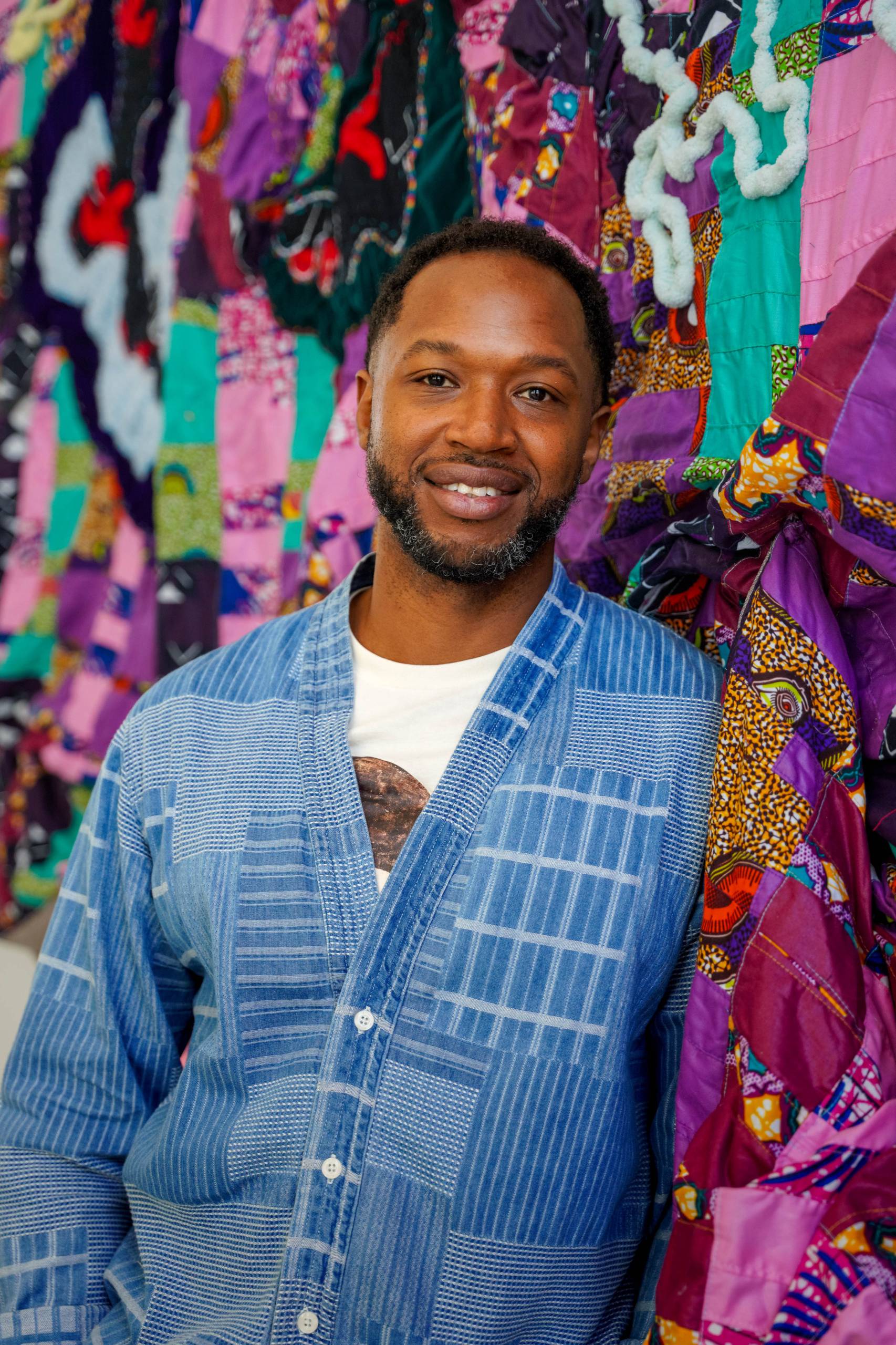
Basil Kincaid
Basil Kincaid (b. 1986, St. Louis) is an artist whose intricate textile works—spanning quilting, drawing, embroidery, installation, and performance—serve as portals into spiritual and cultural memory. Known for a deep engagement with repurposed materials, Kincaid’s practice honors the legacy of Black quilt-making while expanding its language into new, multidimensional forms.
Rejecting rigid categorization, Kincaid navigates both abstract and narrative modalities, exploring the expansiveness of perception and the body across spiritual, emotional, and digital realms. Kincaid’s works are crafted across continents—from studios in St. Louis and Ghana—charting a transatlantic geography of self-exploration, resilience, and cultural continuity. Influenced by artists such as Anni Albers and Alma Thomas, and inspired by natural phenomena, meteorology, and cosmic systems, Kincaid’s practice bridges ancestral traditions with contemporary aesthetics. The result is a visual cosmology that reflects both the terrestrial and the transcendent.
Kincaid’s work has been the subject of solo exhibitions at The Rubell Museums in Washington, D.C. and Miami, for which he was an Artist-in-Residence; Nerman Museum of Contemporary Art; Library Street Collective; Venus Over Manhattan, and elsewhere. Select group exhibitions include Crystal Bridges Museum of American Art; Santa Barbara Museum of Art; Contemporary Art Museum, St. Louis; The Albertina, Vienna; North Carolina Museum of Art; Hauser & Wirt; Smithsonian American Art Museum; Royal Academy, London; and elsewhere.
Kincaid’s work is collected by The Albertina, Vienna; The Bunker Artspace, West Palm Beach; Crystal Bridges Museum of American Art, Arkansas; Detroit Institute of Art; International Quilt Museum, Nebraska; JP Morgan Art Collection, New York; Milken Center for Advancing the American Dream, Washington, D.C.; The North Carolina Museum of Art, Raleigh; The Rubell Museum, Miami; The Smithsonian American Art Museum, D.C., and many others.
While in residence, Basil plans to develop a series of drawings, creating the foundation for new work. Basil looks forward to bringing a practice of play outside of the studio into shared communal spaces, hosting game nights and calisthenics workshops, encouraging physical movement and exploration as modes of creative practice.
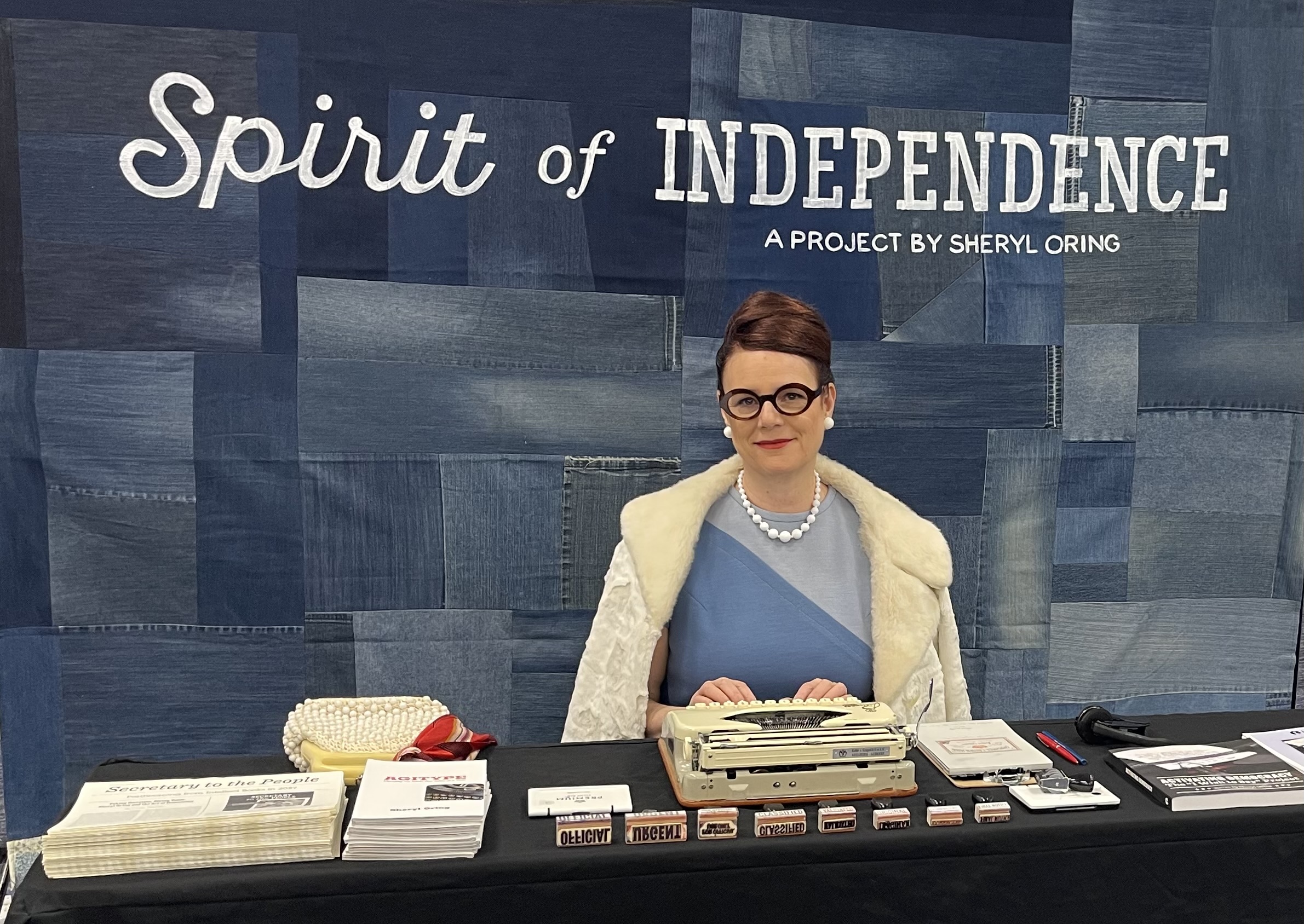
Sheryl Oring
Sheryl Oring examines critical social issues through projects that incorporate old and new media to tell stories, examine public opinion and foster open exchange. Using tools typically employed by journalists (the camera, the typewriter, the pen, the interview and the archive) she builds on experience in her former profession to create installations, performances, prints, artist books, sculptures, and internet-based works that address themes of democracy, citizenship, free expression, first amendment rights, story-telling and activism through art. Oring is a Creative Capital Fellow and has received grants from Franklin Furnace, New York Foundation for the Arts, the Puffin Foundation, and the North Carolina Council for the Arts.
She has shown her work at the U.S. Pavilion of the Venice Architecture Biennale; Bryant Park in Manhattan; the Brooklyn Public Library; the Free Library of Philadelphia, the National Liberty Museum in Philadelphia; the Jewish Museum Berlin; and the Museum of Contemporary Art in Chicago. She has also presented work at Art in Odd Places in New York; the Art Prospect festival in St. Petersburg, Russia; Encuentro in Sao Paolo, Brazil; and the International Symposium on Electronic Art in Dubai.
She has completed public art commissions at the San Diego International Airport and at the Tampa International Airport. Collecting institutions include the Library of Congress; Museum of Modern Art; Tate Britain; Bibliothèque nationale de Luxembourg; University of North Carolina at Chapel Hill; La Jolla Athenaeum; Yale University; University of California, Irvine; and many other university libraries across the United States.
During her residency, Oring will continue to develop her work within America 250: Common Threads with in-gallery and pop-up performances of “A Spirit of Independence”. Using this project as a moment of reflection and expression on the state of affairs and identity of this country, Oring will explore new formats for future projects.
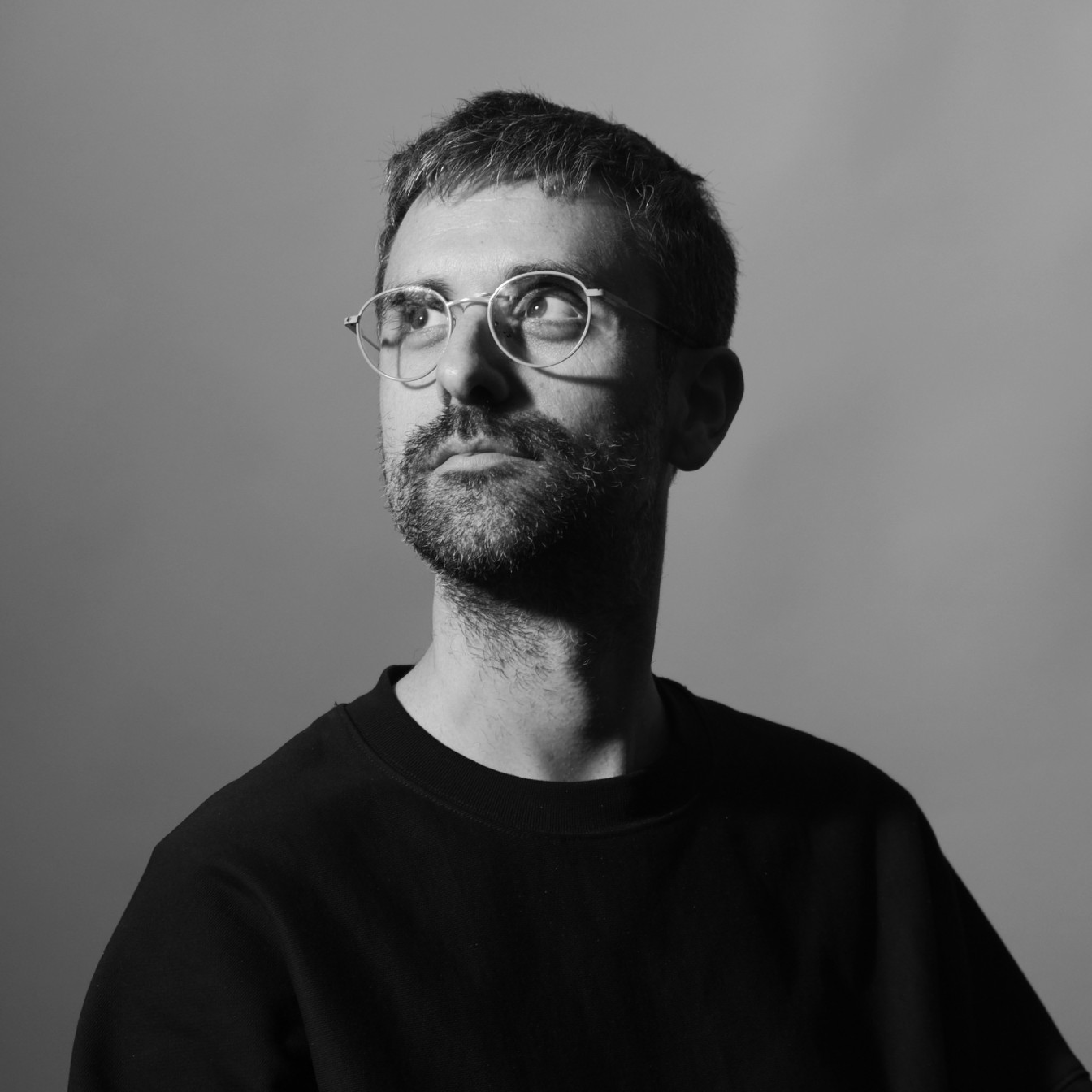
Mattia Casalegno
How do flavors unlock personal histories? How do sensory cues reshape our perception of taste? Guided by influences as eclectic as Derren Brown’s choreography of the mind, Plutchik’s cartography of emotion, Niki Segnit’s synesthetic language of flavor, and the uncanny companionship of AI chatbots, Mattia Casalegno uses this residency to explore how taste, memory, and identity entwine with immersive technologies to shape new ways of telling stories.
Mattia Casalegno is an interdisciplinary artist and technologist working in video, performance, immersive installations, and mixed reality. His practice investigates the relationship between nature, society, and technology, drawing from the disciplines of anthropology, ecology, biology, neurosciences, and informatics to create sensorially embodied, psychologically heightened experiences. Mattia has exhibited in more than 100 international venues including SIGGRAPH Asia, ISEA – International Society of Electronic Artists, Ars Electronica, Mutek festival, Untitled Art Fair, Superblue Museum, MACRO Museum, Cini Foundation, Rome’s Auditorium and RomaEuropa Festival, Cimatics festival, Festival de La Imagem, Quintai Museum of Fine Arts. His work has appeared in publications such as “A Touch of Code” -Gestalten Books; “Tactics of Interfacing” -MIT press; “Deleuze and Audiovisual Art” -Manchester Metropolitan University, and on media outlets as the New York Times, Washington Post, Wall Street Journal, Bloomberg, CNBC, CNN, Sky News, Artribune, Exibart, Hyperallergic, among others.
Mattia has also received number awards and fellowships including New Technological Art Awards in 2014, artist-in-residence at Eyebeam in 2015, NEW INC, the Center for Cultural Innovation, Young Italian Artists Network, NYFA, the Elizabeth Foundation for the Arts and the Chronus Art Center. In 2018, Mattia was a recipient of the Lumen Prize. He currently serves as faculty in the department of Art and Computation at the Rhode Island School of Design (RISD) and in the Digital Arts department at Pratt Institute, NY.
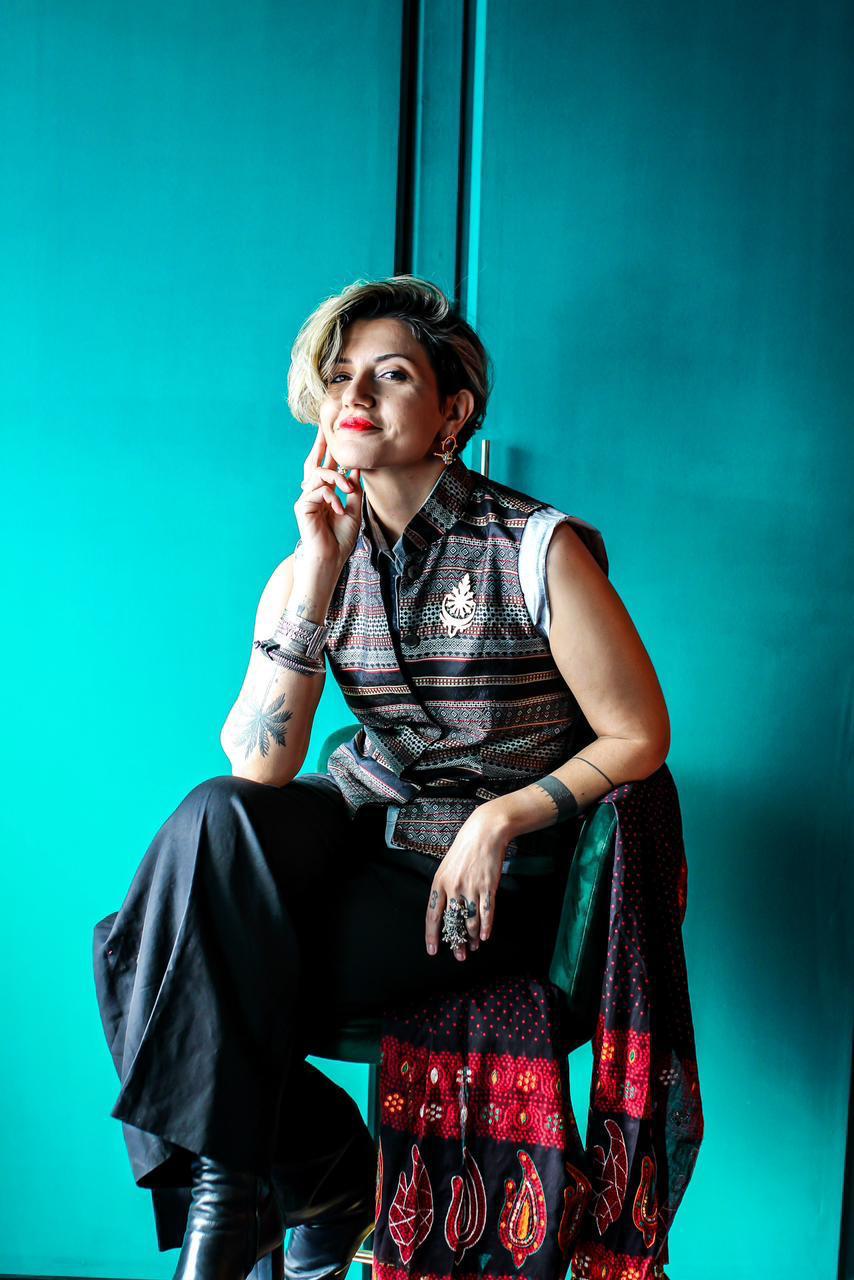
Alia Ali
Alia Ali is an artist whose practice is informed by Yemeni cultural heritage and shaped by a life lived through movement, displacement, and sustained research. Working in collaboration with Indigenous communities globally, her multimedia practice engages material traditions and shared systems through which knowledge circulates across place and time. Grounded in the present while attentive to both ancestral memory and futurist thought, Ali’s work challenges the tendency to frame Indigenous cultures solely through the past. Instead, her practice considers how the deep histories carried through material, ritual, and language are essential to imagining futures—how looking further back enables us to see further forward.
Language forms a central foundation of Ali’s work, understood not only as verbal or written communication but as something embodied and lived. Across photography, textiles, sculpture, and installation, she engages cultural memory, lived histories, and lineage, while examining asymmetries of power and the ways knowledge is preserved, transmitted, and reimagined beyond dominant representational frameworks. Alia Ali is a Jameel Fellow at the Victoria and Albert Museum and a Global Nikon Ambassador. Her work is held in notable public collections around the world and has been featured in publications including The New York Times and the Financial Times.
During her two-month residency at The Momentary, Alia Ali will develop a new multi-channel video installation that marks a return to her foundational training in moving image.
While widely recognized for photographic sculpture and immersive textile-based environments, Ali began her practice in video and remains deeply engaged with its spatial and temporal possibilities. At Crystal Bridges, she will explore video as a diasporic medium—one capable of holding parallel narratives, overlapping soundscapes, and simultaneous temporalities within a single environment. The project departs from her earlier focus on pattern as shared visual language and turns toward recurring cross-cultural motifs: the spider, the serpent, and the scorpion. Often misread as symbols of threat, these figures function in many traditions as protectors, agents of regeneration, and keepers of time. Through immersive moving image and sound, Ali will reorient these forms as poetic presences, inviting audiences to reconsider fear, symbolism, and relational knowledge.
Blas Isasi
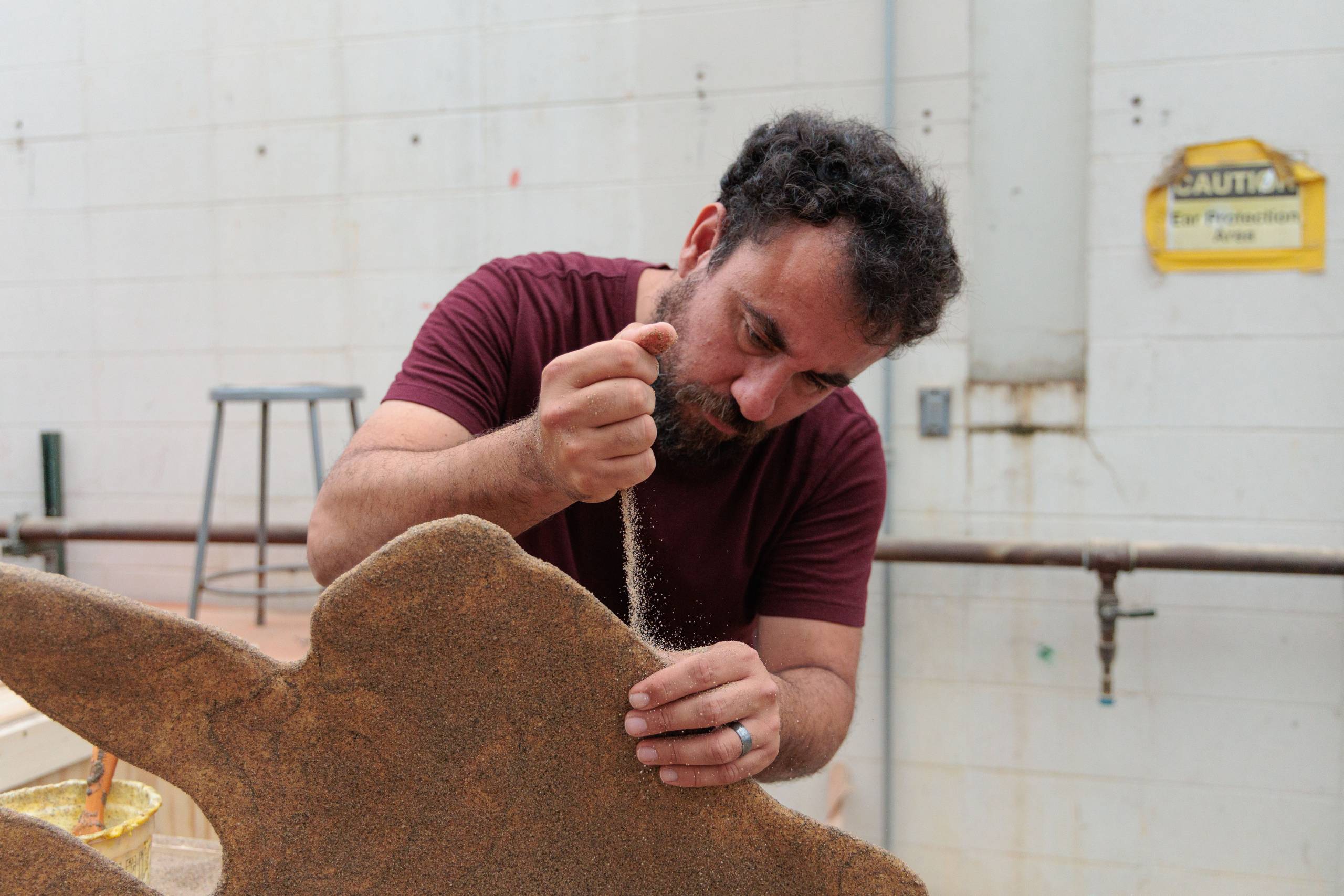
Blas Isasi is a Peruvian visual artist exploring the aesthetics and poetics associated with the Peruvian desert. Based in Greensboro, NC, Blas uses these explorations to ground investigation of Andean cosmology and its ability to illuminate unseen elements that shape our contemporary present. Rather than seeking to re-enchant the world in the realization of Modernity’s limits, Blas’s work brings attention to the enduring cosmic energies that influence politics, society, culture, economy, materiality, and reality.
Blas’s work has been presented in exhibitions across Latin America, the United States, and Europe. He was an artist-in-residence at the Joan Mitchell Center in New Orleans (2021) and participated in Prospect.6: The Future Is Present, The Harbinger Is Home, curated by Miranda Lash and Ebony G.Patterson at New Orlean’s triennale. Blas was the 2024-2025 Henry L. & Natalie E. Freund Fellow at Washington University’s
Sam Fox School of Design & Visual Arts, a fellowship that culminated in a solo exhibition at the Saint Louis Art Museum in February 2026 titled Currents 125: Blas Isasi. Past honors include the Braunschweig Projects Scholarship, a year-long residency in Brunswick, Germany. Blas currently serves as an Assistant Professor at the University of North Carolina in Greensboro. He received his BA in painting from Pontificia Universidad Catolica del Peru and an MFA in sculpture from Tulane University, in addition to being an alumnus of the Jan van Eyck in Maastricht, Netherlands.
While in residence, Blas’s work will gesture towards an inter and trans-species future, where hybridity is the norm. The work will explore rehabilitating ancient and non-Western political and symbolic practice technologies to foster interspecies alliances embedded in Lakota and Quechua epistemologies specifically between the Llama, Tatonoka (buffalo) and the human body. Blas seeks to draw upon ancient Andean embodiment practices to reclaim other-than-human beings from the colonial, domesticated, ossified nation-state imaginary and reinstate them as active political subjects in their own right.
Karen Navarro
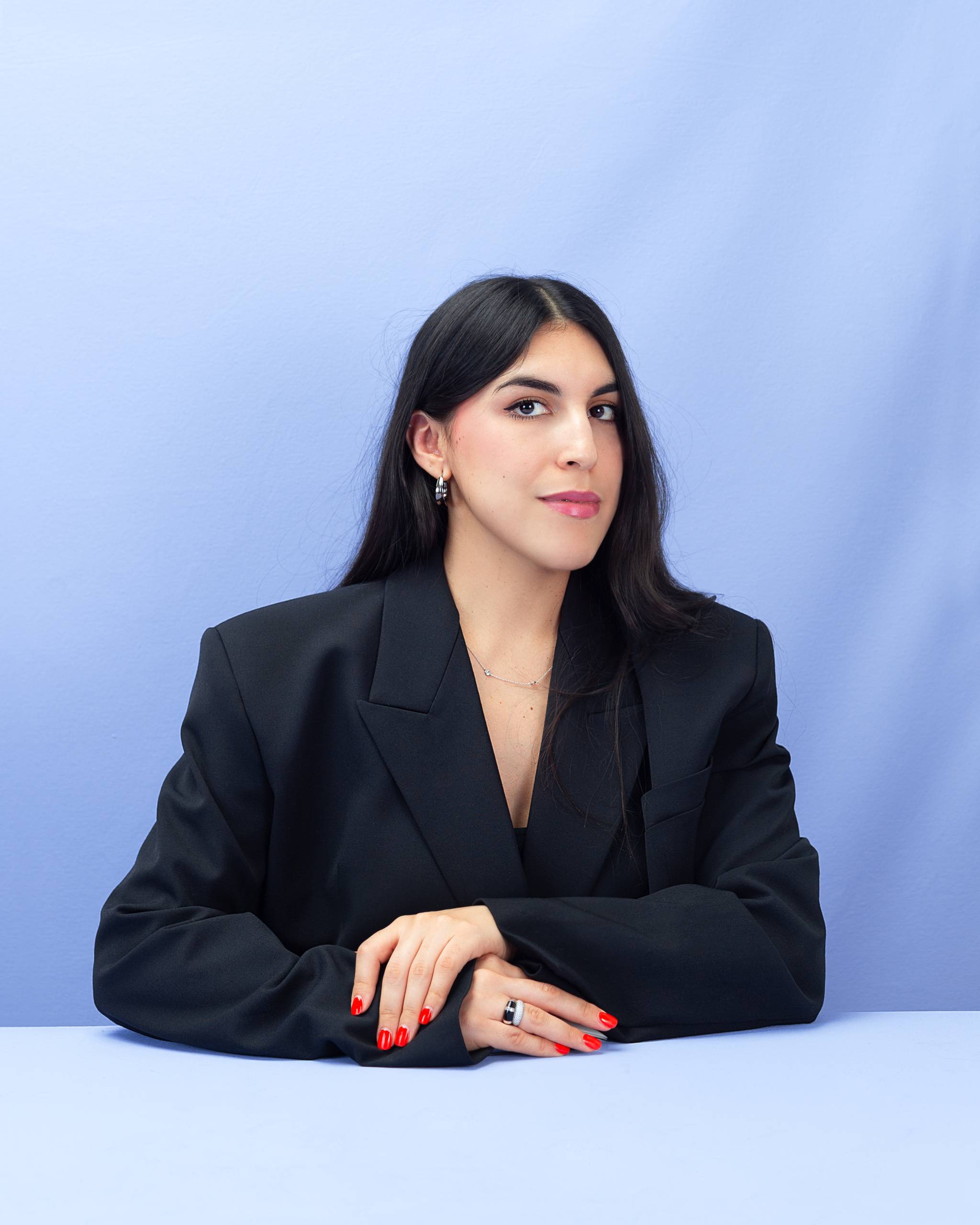
Karen Navarro is an Argentinian artist based in Houston, of Mapuche, Guaraní, and European descent. Working across photography, collage, and sculpture, her practice examines the intersections of identity, race, representation, and belonging through the lenses of migration, Indigenous identity, and the enduring legacies of colonization. Navarro’s work engages the complexities of cultural hybridity, communication technologies, and the politics of beauty, creating visual spaces that affirm presence, acceptance, and embodied existence.
Navarro is the recipient of numerous awards, including the Artadia Fellowship, the Top Ten LensCulture Critics’ Choice Award, and the Houston Center for Photography Beth Block Honoraria. In 2026, she was the inaugural artist-in-residence at PAC Art, alongside Claudia Alarcón and Silät. In 2024, she was an artist-in-residence at the Atlantic Center for the Artsin New Smyrna Beach, Florida.
Her work has been exhibited widely in the United States and internationally. Selected exhibitions include the Contemporary Arts Museum Houston, Artpace, Galerija Upuluh, the George Washington Carver Museum, the FAR Center for Contemporary Arts, the Holocaust Museum Houston, and Melkweg Expo.
Navarro’s work has been featured in numerous publications, including ARTnews, The Guardian, The Observer, and Rolling Stone Italia.
While in residence, Karen will develop a series of work on paper that speaks to material economy while foregrounding the layered histories of Indigenous bodies and symbols in Argentina. Through collage, and installation, the works will examine how imagery and material culture operate as unstable cultural codes—carrying memory, inheritance, and generational knowledge while bearing traces of commodification and appropriation.
Kholoud Sawaf
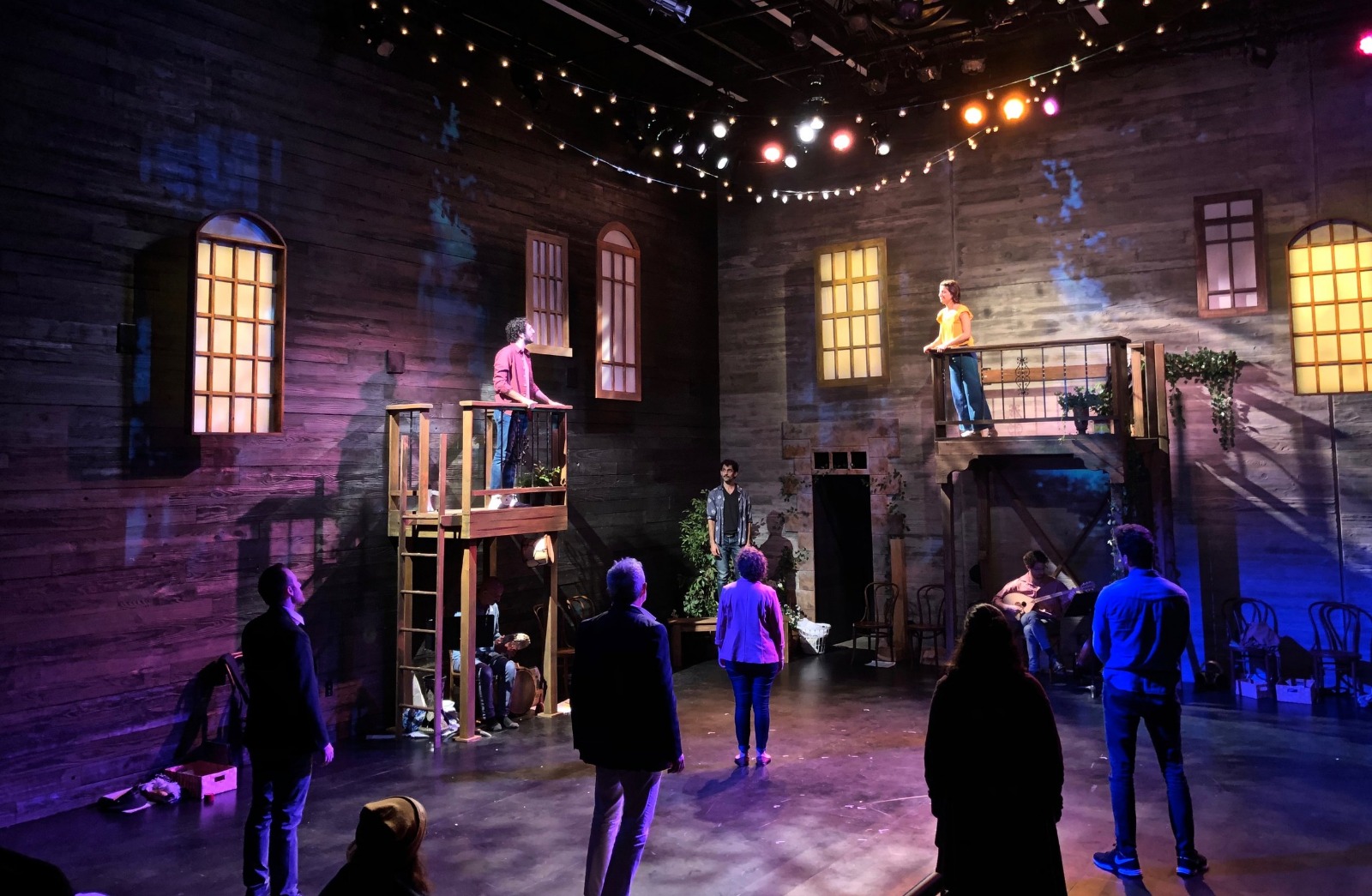
Kholoud Sawaf is a Syrian director and creator living in The United States whose work is driven by visual and physical storytelling and ensemble practice. Kholoud’s work often incorporates both movement and music, while simultaneously leading an audience on an emotional journey.
During her residency, Kholoud will be developing a new physical process for performance—shaped by years of cross-cultural movement exploration and a diverse foundation in physical and performance training. Though newly taking shape in practice, the work emerges from years of reflection, research, and embodied dreaming, and gestures toward new possibilities in how presence, authenticity, and the body are approached in contemporary theatre.
Sichong Xie
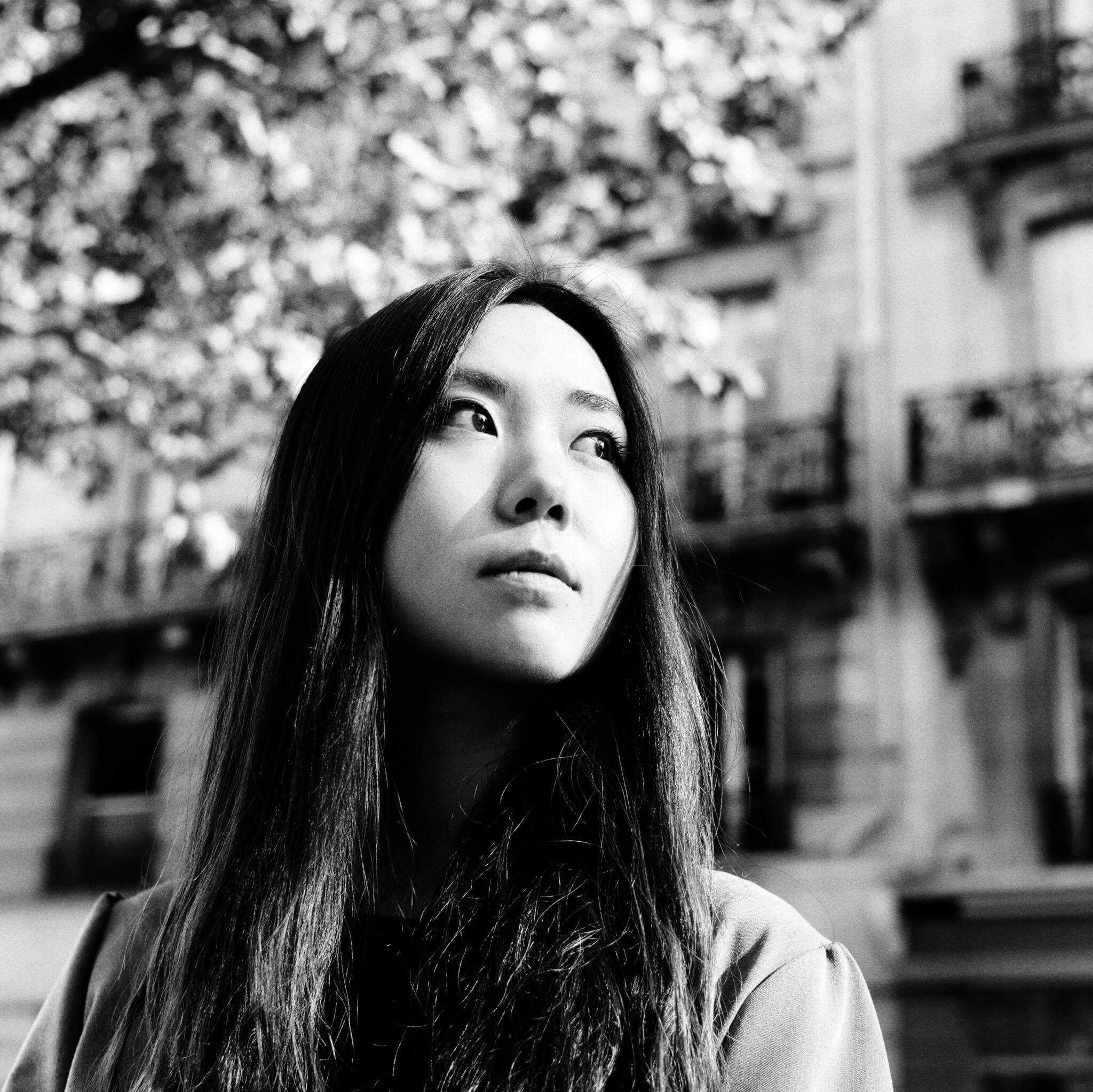
Sichong Xie is a multidisciplinary artist currently living and working in Los Angeles. Her practice combines materiality, movement, and performance of memory through elemental media and site-specific installations. By placing traditional sculptural forms within new sites, materials, and social constructs, she investigates these forms and movements within global communities to re-consider and re-envision shared spaces and performative practices. Her practice raises questions about identity, politics, cross-culturalism, and the surreal characteristics of her body in the ever-changing environment. Xie is interested in the research of human populations, their geographical locations, and the resulting cultural movements, she strives to create work that reflects the importance of the spaces we find ourselves in and their impact on our lives.
Xie holds an MFA from CalArts and is a 2022 MAP Fund and 2021 Artadia Los Angeles Award recipient. In her recent durational performance/installation, Trampoline House: Memory Drawing Series, at the Armory Center for the Arts, she transforms a playground into a stage of temporal disintegration. Drawing from children’s games and the rawness of construction site materials, this durational performance collapses the boundaries between play and labor. A trampoline becomes the platform for a living drawing, where a large chalk piece is layered over original architectural blueprints from Xie’s grandfather in the 1960s.
Every memory is an empty theater—a space that once held meaning, now gradually fading into oblivion. As the durational performance slowly dissolves the chalk drawing, the ephemeral nature of memory takes form in every movement. Xie’s commitment to durational performance extends across her practice, including her 2017 project Walking With The Disappeared during the Hauser & Wirth Somerset exchange residency in the U.K. She has been a fellow at MacDowell, the Studios at MASS MoCA, Yaddo, the Watermill Center, the Fine Arts Work Center, the Vermont Studio Center, and the Skowhegan School of Painting & Sculpture. Her practice has been supported by grants from Artadia, The MAP Fund, Foundation for Contemporary Arts, and Marciano Art Foundation.
During her residency at the Momentary, Xie hope to develop a new body of work that expands on her ongoing investigation into diasporic memory and architectural temporality, with particular attention to how inherited structures, both physical and familial, carry and lose meaning across generations. Building on Trampoline House: Memory Drawing Series, she is interested in pushing the relationship between durational performance and sculptural installation, exploring how repetitive movement, site-responsive materials, and the gradual dissolution of form can enact the lived experience of memory fading and reforming.
Cornelius Tulloch
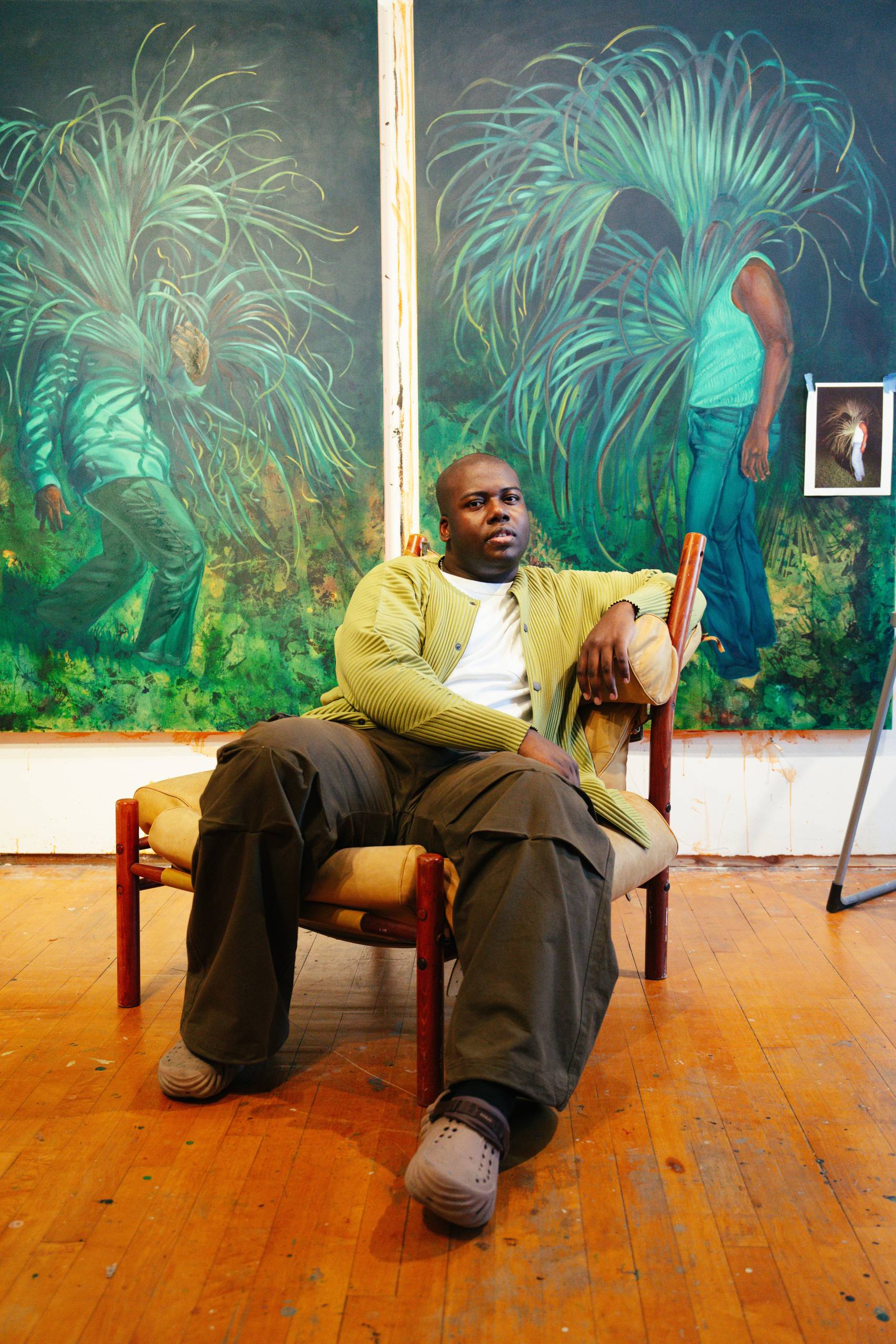
Cornelius Tulloch is a Miami-based interdisciplinary artist and architect. His work transcends the boundaries of painting, photography, and architecture. Tulloch focuses on how creative mediums can be combined and subverted to tell powerful stories. Cinematic moments, spatial complexity, light, and color are important characters in his practice. His work explores the importance of cultural identity within built environments and how space shapes culture, which in turn cultivates landscapes.
Tulloch’s work has been shown in institutions such as the Kennedy Center, Washington D.C.; NYU Center for Black Visual Culture; CUE Art Foundation, New York; Locust Projects; Faena Art Project Room; and the MAXXI, Rome. He was a 2016 Presidential Scholar in the Arts, and his work is presented as part of the permanent collection of the Studio Museum in Harlem. Tulloch has won numerous prizes and residencies; he was named an Emerging Visionary Grantee by Instagram and the Brooklyn Museum’s Black Visionaries Program in 2022, is a two-time Oolite Ellies Award recipient, and received the 2023 YoungArts Jorge M. Perez Award. Tulloch has also been selected as artist laureate for the Bakehouse x Cité internationale des arts residency in Paris, France. Most recently, Tulloch was selected as a 2024 Knight New Works recipient pushing forward his architectural sculpture series Porch Passages. And he was invited to participate as 1 of 10 artists in the 2025 Florida Prize in Contemporary Art exhibition at the Orlando Museum of Art. As Global Artistic Director of AIRIE. Foundation and an Alumni Fellow, he has led projects for “Personal Structures” in Venice Italy, April 2024; and the 2024 Cooper Hewitt Design Triennial. Many of Tulloch’s projects have been grounded in his upbringing and communities in Miami, as well as inspired by his Jamaican and African- American heritage. His work expresses the ways in which bodies exist between cultures and borders. Tulloch’s multidisciplinary practice seeks to redefine and reshape the boundaries of art and space.
Cornelius Tulloch plans to explore, experiment, and develop three areas of his practice; he will further research and reimagine narratives of the body in relation to the American landscape, explore hidden artistic legacies in American art, and experiment with how performance expands his work beyond the canvas.
Kyreeana Breelin Alexander
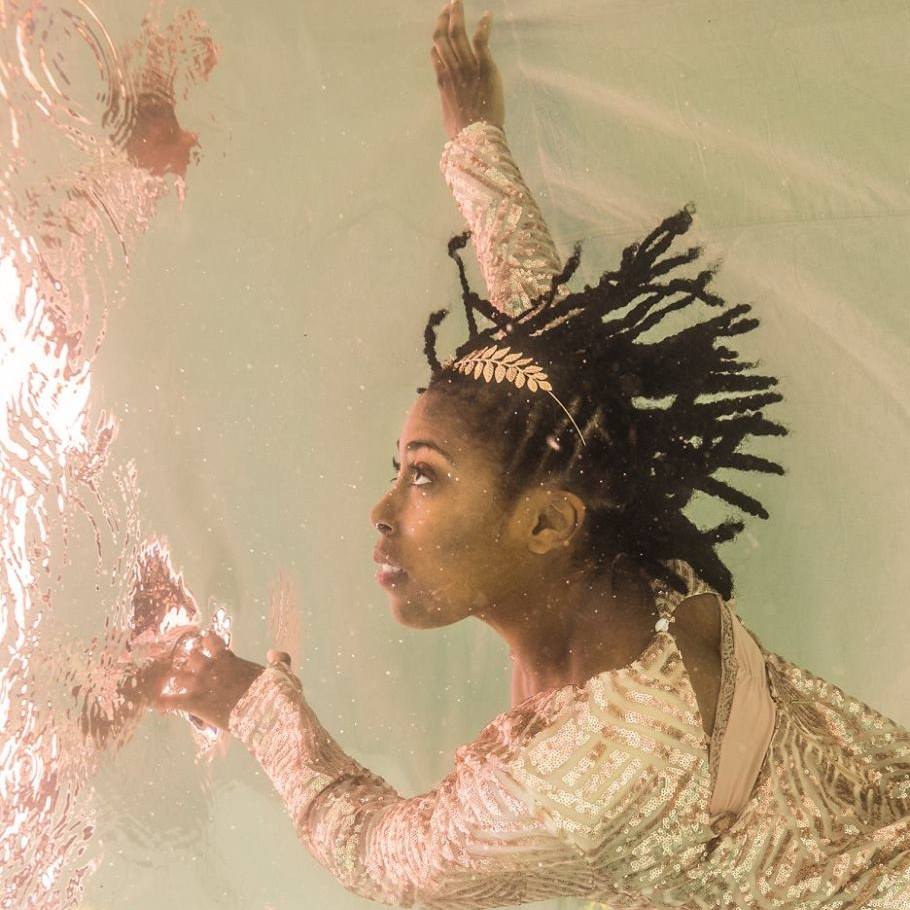
Kyreeana Breelin Alexander is a multidisciplinary artist working in dance, songwriting, digital art, and organic hand puppetry. She holds a BFA from CalArts, an MFA from UCLA, and an MA from Berklee College of Music. Kyreeana is the founder of Crayons and Cookies, a company focusing on interdisciplinary performance and arts education. She is also the recent recipient of the Robinson Award through the National YoungArts Foundation. Kyreeana has served as Guest Artist and Lecturer at UCLA, Dance Guest Artist at Chadwick School (Palos Verdes), Dance Faculty at CSArts-SGV, and Guest Artist at Whittier Christian High School. Kyreeana collaborates with her brother (musical lyricist, artist) Vinci Lewis on the project Paint Brush Game, fostering a unique blend of visual and performing arts. Her choreographic works and original music compositions have been performed in venues such as REDCAT, The Nimoy Theater, Glorya Kaufman Theater, and The Brea Curtis Theatre. Her collaborative works have been showcased through Dance and Film at The Hollywood Verge Film Awards, the International Independent Film Awards, and the Vision Dance Film Festival in Taiwan. Her work has also been showcased at Netflix (L.A.), the New World Center in Miami, and the Los Angeles Theater Center. With a passion for pushing creative boundaries, Kyreeana continues to advocate for the arts through her multifaceted contributions, encouraging a deeper appreciation for the interconnectedness of various artistic disciplines.
Kyreeana creates interdisciplinary work that merges rhythm tap dance with modern/contemporary dance, original composition soundscores, songwriting, and film/organic hand puppetry. She uses rhythm to voice her imaginative thoughts, to convey emotion: playful to serious, simple to virtuosic, the complexities of life, and the human experience. She imagines creating work that spans genres and blends them to create an artistic work that feels like an interdisciplinary mix-tape or album. Her most recent project centers around a solo work, “We Cool,” and her interest in blending different disciplines—primarily through the improvisational elements of music, dance, and film. With time and space offered, she hopes to explore themes of present-day fears, artistically linking a pathway from fear to empathy to encouragement to empowerment.
Meadow Makers
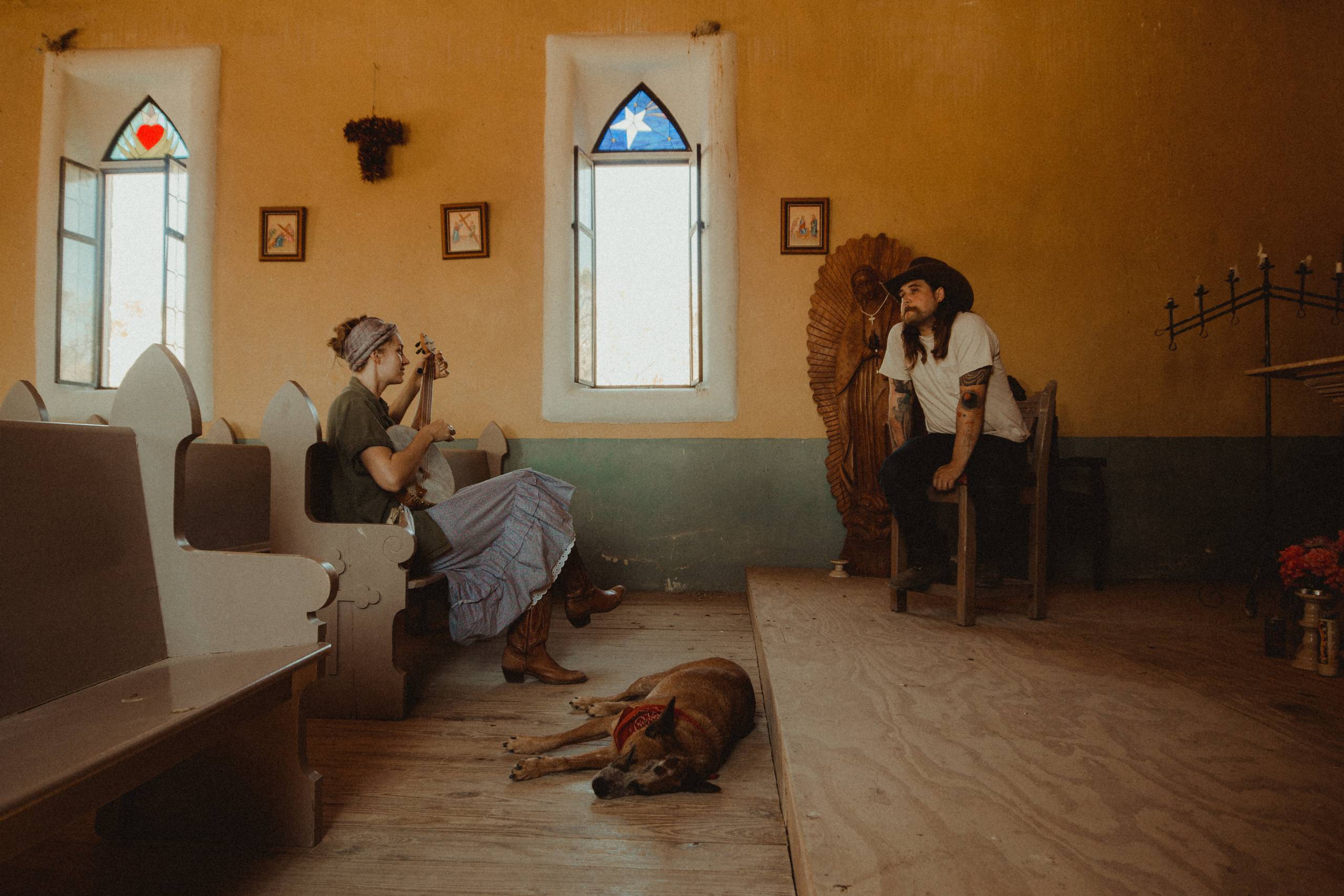
Making moves and clearing paths for the future; pushing against borders and birthing space. Meadow Makers is a melodic and vocal driven folk duo from Northwest Arkansas. Comprised of Dana Louise and Noah Richmond. Their diverse musical backgrounds and shared love of songwriting have brought them together to create a fresh and unique twist on the traditional folk sound. Through their songwriting, arrangements, and musicianship, Meadow Makers strives to create a deeper connection with their listeners. In changing times Meadow Makers hopes their music gives the listener some time to think, reflect, and create positive change in themselves. They hope you walk away, into life, feeling refreshed and hopeful for the future.
They see this residency as an amazing opportunity for Meadow Makers to gain inspiration and broaden their artistic community, while looking critically at their practice and experimenting with creative outlets that they haven’t yet been able to explore. They are excited to have the time and financial means to focus on their art and collaborate with/utilize the amazing people and resources available through this residency. When Meadow Makers time with The Momentary, and Crystal Bridges comes to an end, they hope to have left a small impact and built lasting professional and personal relationships with the artists and curators tehy are so excited to be working with.
CeCe Marie
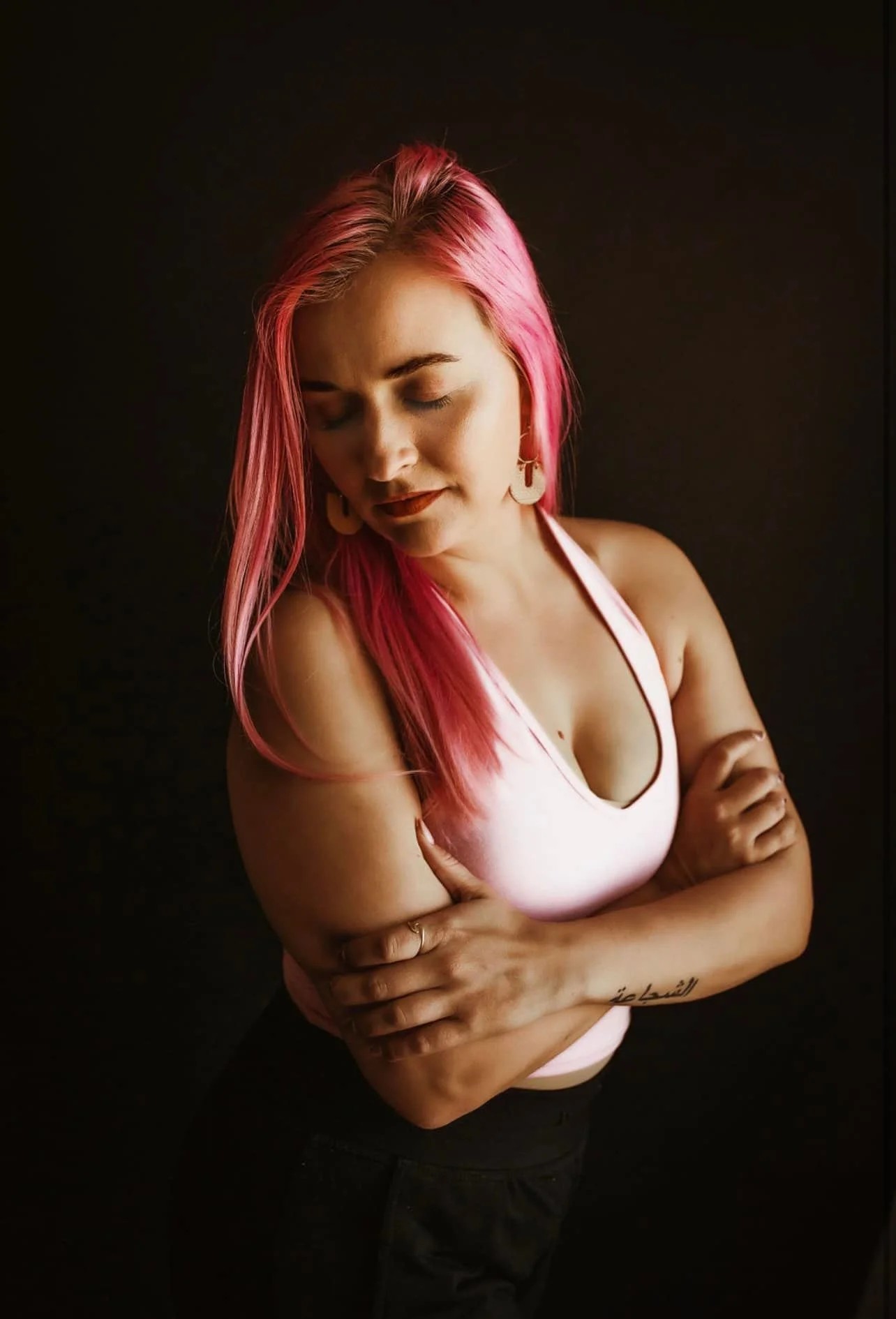
CeCe Marie is a dynamic dancer, choreographer, and educator dedicated to empowering individuals and communities through movement, creativity, and cultural storytelling. With a career spanning innovative dance education, transformative choreography, and community engagement, she combines deep artistic insight with a passion for arts integration, working with schools, arts centers, and festivals to inspire audiences and students alike. CeCe’s work bridges performance and education, grounded in cultural context and progressive ideals, while her leadership in initiatives like Rooted Movement Collective and The Vibe Dance Co., along with her creative partnerships, reflect her commitment to using dance as a catalyst for connection, expression, and social transformation.
The Vibe is an Arkansas-based adult dance studio and professional training company supporting dancers from beginner through advanced. It offers both recreational classes and professional, paid performance opportunities through its adult dance company. Dancers train in weekly classes to build technique and confidence, with the option to pursue advanced training, rehearsals, and paid commercial work through The Vibe Company—the state’s largest adult, industry-focused dance company. Rooted in unity and radical joy, The Vibe is a welcoming, vibrant community where adult dancers can grow, perform, and evolve as artists at any stage.
While in residence, The Vibe will cultivate an inclusive, community-centered dance practice through a series of open studios, workshops, and public-facing programs designed to make dance—particularly hip hop styles—accessible to adult dancers across Northwest Arkansas. Centering hip hop culture as both an artistic form and a social practice, the residency will invite new and returning dancers to build technique, confidence, and creative voice through shared movement and collective learning. The residency will culminate in a curated showcase of performances at The Vibe Block Party in Spring 2026, highlighting dance as a living, evolving practice shaped by community, collaboration, and celebration.
The Vibe Dance Company: Artistic Director/choreographer: CeCe Marie, Assistant Director: Hannah Hoye, PR/Communications: Elizabeth Muscari, Dancers: Mycayla Sawyer, Hai Lam Huynh, Trinity Moore, Mak Gray, Zoe Cordasco, August Mays, Terrell Palmer, Nena Brown, Garrett McCarty, Sophia Wright, Susan Demoss, Jeny Gomez, Mickey Simental, Yesenia Deloera
TheatreSquared
TheatreSquared’s signature offering of bold new plays in an intimate setting at 477 W. Spring St in downtown Fayetteville, AR has driven its growth to become the state’s largest theater, offering more than 350 performances annually in an intimate setting. The playwright-led company is one of mid-America’s leading laboratories for new work, having launched more than 70 new plays. Offering far-reaching access and education programs and an open-all-day gathering space, the Commons Bar/Café, TheatreSquared remains rooted in its founding vision, that “theater—done well and with passion—can transform lives and communities.”
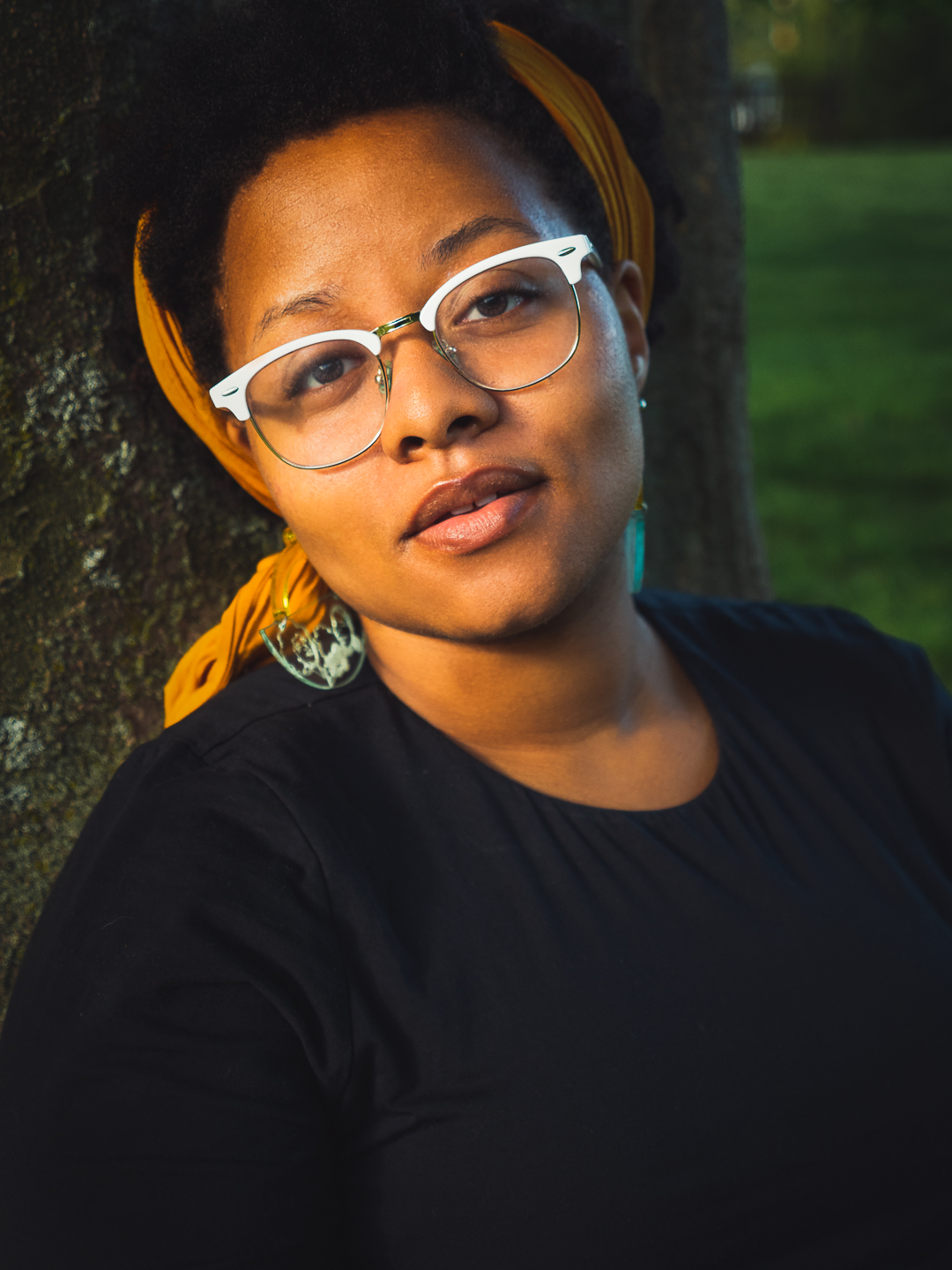
a.k. payne
a.k. payne (she/they) is a playwright and theatermaker with roots in Pittsburgh, Pennsylvania. Their plays love on and engage Black lives and languages beyond the confines of linear time to find/remember stories that might create conditions for our collective liberation(s). They hold a B.A. in English and African-American Studies from Yale College and an MFA in Playwriting under Tarell Alvin McCraney from fka Yale School of Drama. Their work has been a finalist for the L. Arnold Weissberger New Play Award. She is a 3x finalist and the 2025 winner of the Susan Smith Blackburn Prize, the largest and oldest international award for women+ writers. She is currently a resident artist/fellow with National Black Theatre’s I AM SOUL Playwrights Residency and Advancing Black Arts in Pittsburgh (Pittsburgh Foundation). They are a grandchild of the Great Migration; a queer & non-binary abolitionist affected in community by the ‘New Jim Crow;” and of a great lineage of Black women storytellers and living-room archivists; all of which deeply informs, uplifts and amplifies their work as a playwright, community organizer and spacemaker.
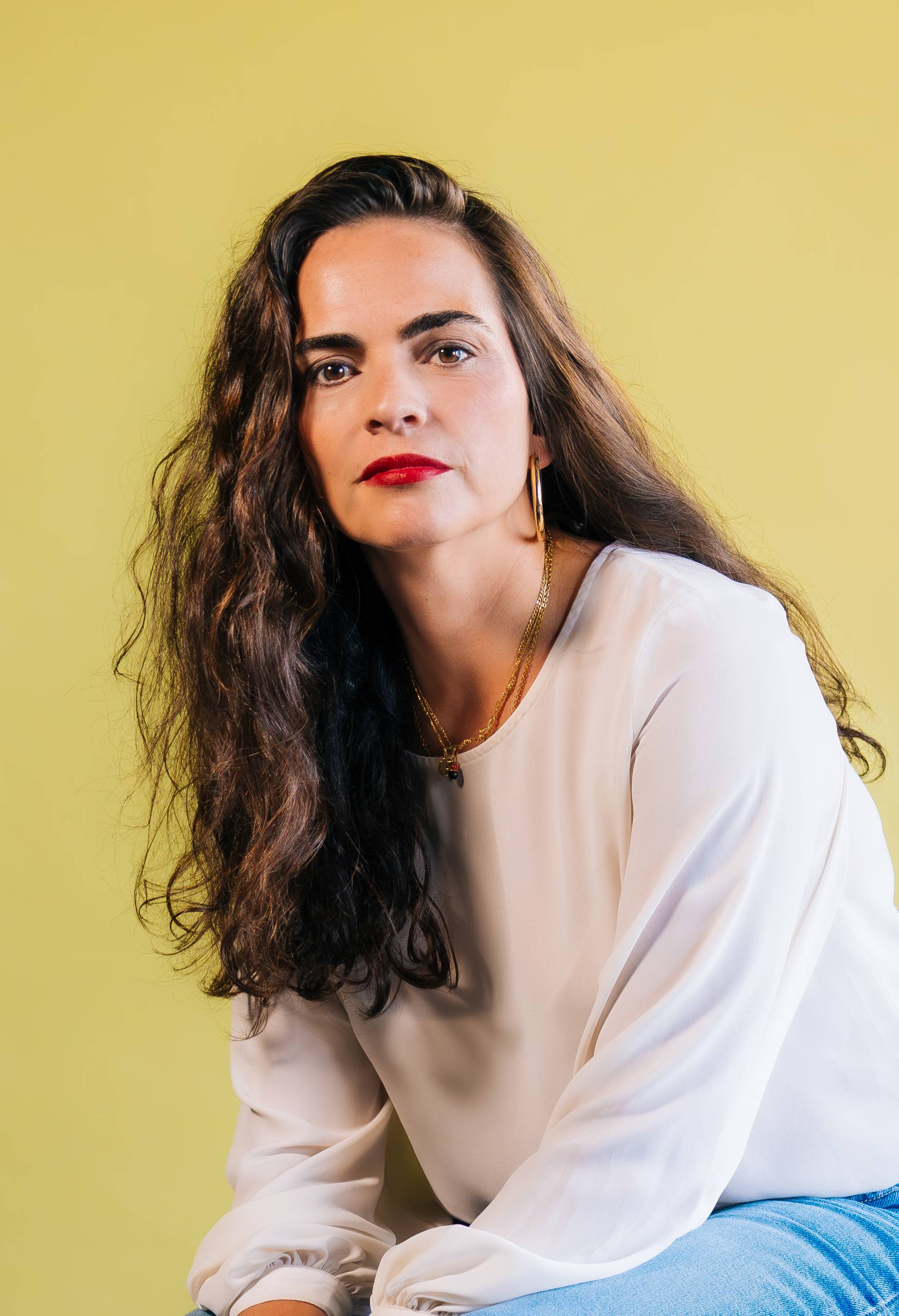
Iraisa Ann Reilly
Iraisa Ann Reilly is a writer, actor and educator originally from New Jersey. She will be performing her one-woman show, A Bodega Princess Remembers La Fiesta de Los Reyes Magos, 1998, Off-Broadway this fall. Bodega Princess is produced by The Lucille Lortel Theatre, Ensemble Studio Theatre and Latinx Playwrights Circle. As a writer her work has been developed and recognized by Teatro del Sol, Atlantic Theatre Company, La Jolla Playhouse, Two River Theatre, Arkansas New Play Festival, Bay Area Playwright’s Festival, Theatre Exile, The New Harmony Project, Texas A&M University, Michigan State, Sol Project, Simpatico Theatre Company, Latinx Playwrights Circle, Art House Productions, and the Yale Drama Series. She is currently under commission with Arden Theatre Company and was a member of Soho Rep’s Writer/ Director lab, 2024-2025. As an educator, Iraisa Ann is an adjunct professor in the Department of Dramatic Writing at NYU Tisch and is a teaching artist with Roundabout Theatre Company, ESPA Primary Stages, and Dreamyard Inc. MFA Dramatic Writing from NYU. BA Theatre and English from the University of Notre Dame.
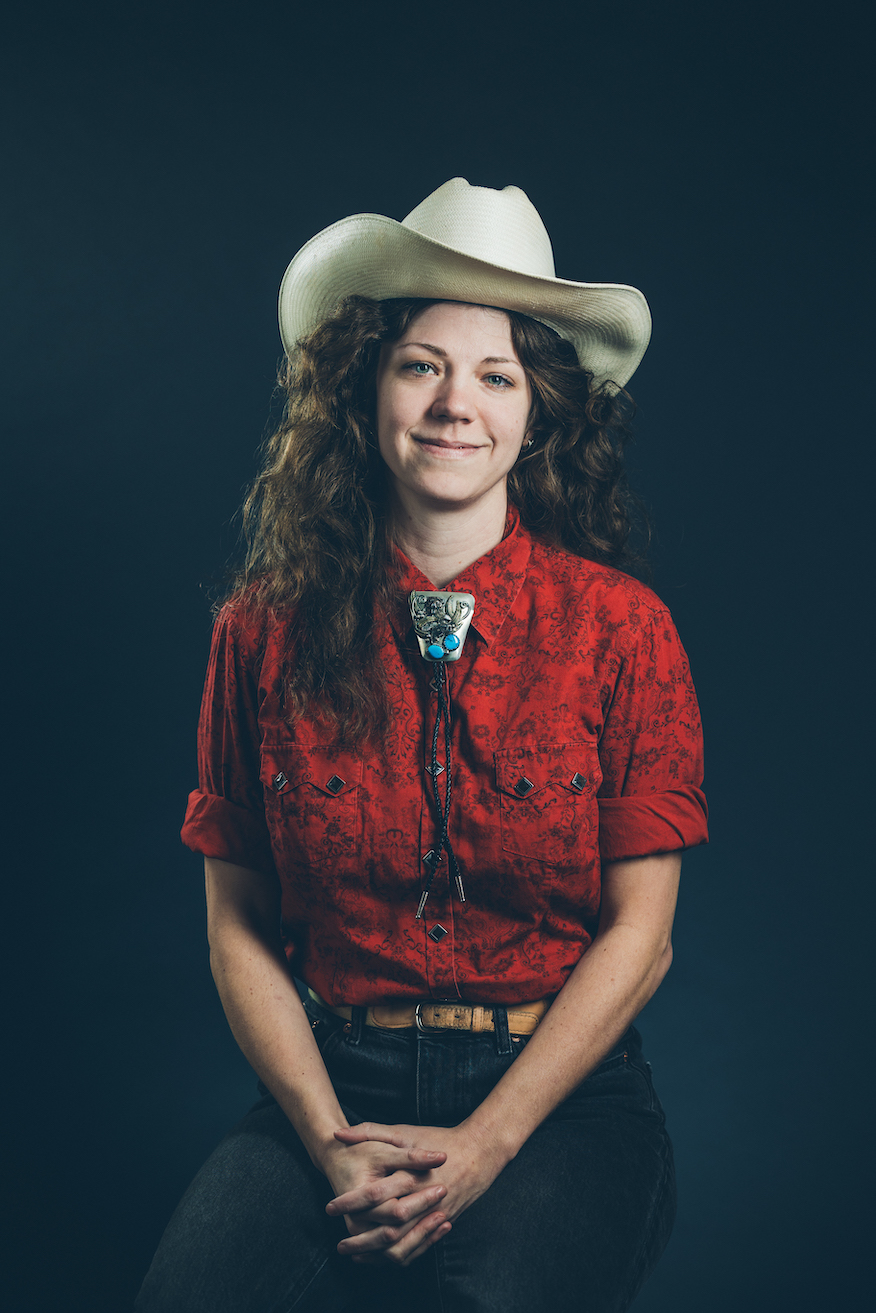
Sarah Dianne Loucks
Sarah Dianne Loucks is a playwright and theater-maker. Previously, she was the playwriting apprentice for Arketype New Works Festival at TheaterSquared in 2024. Currently, she is a Post-MFA Playwright at Ohio State University in Columbus Ohio. Sarah is the recipient of a 2024 MAPfund grant, an Individual Artist Fellowship from the Arkansas Arts Council, and two Artist 360 awards from the Mid-America Arts Alliance. She is a four-time funding recipient from the Austin Cultural Arts Council and was awarded the Three New American Plays prize by Forward Flux Productions in 2017. Her plays have been produced and developed in theaters, warehouses, and backyards in NYC, Austin, TX and Fayetteville, AR. BA Bard College, MFA University of Arkansas.
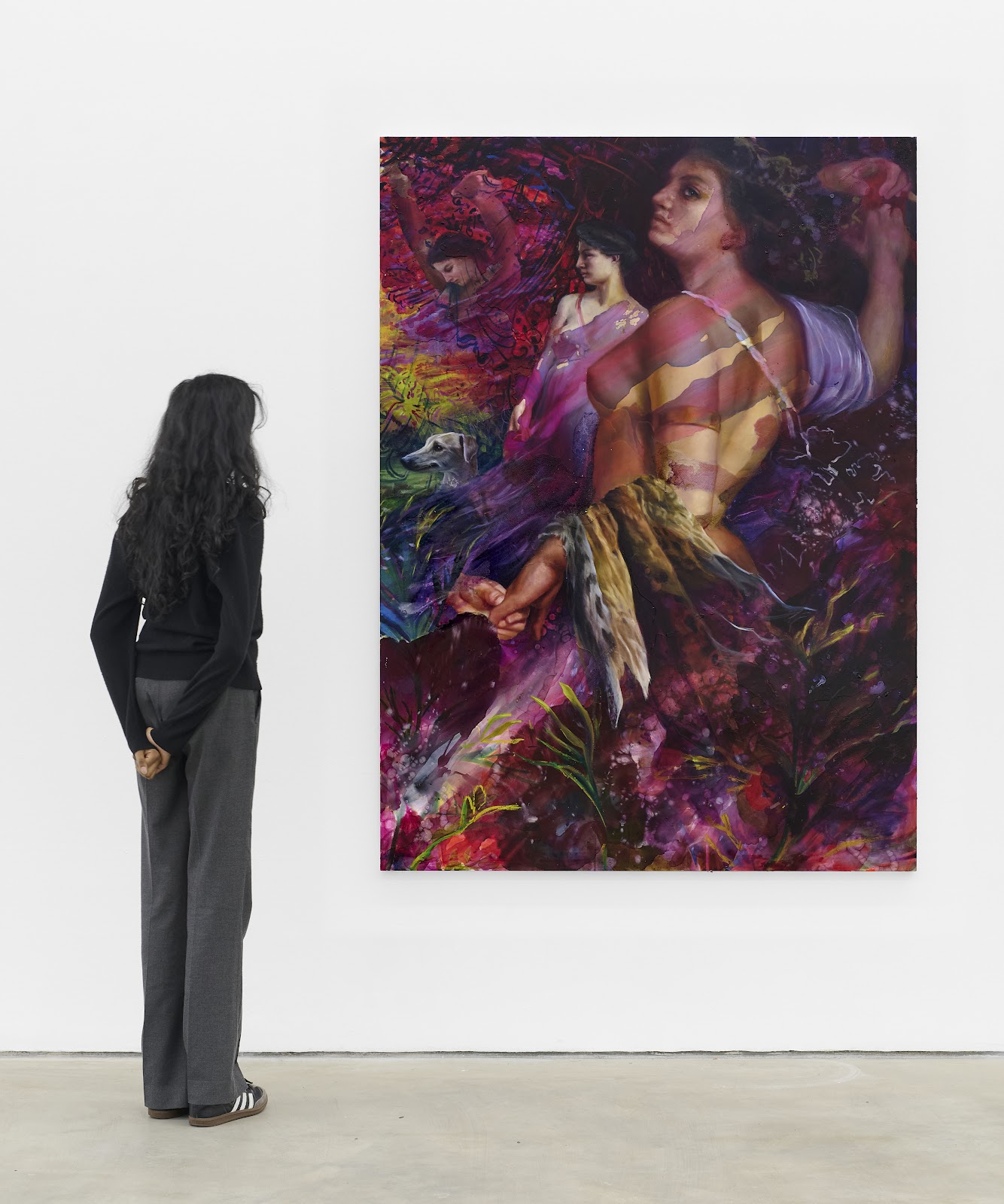
Angela Fraleigh
June 22 – August 8, 2026
Angela Fraleigh is a research-based painter whose monumental works and site-responsive installations examine power, gender, and representation through layered compositions that move between figuration and abstraction. Her practice engages museum collections, archives, and cultural landscapes to illuminate overlooked histories and reimagine women’s roles in visual culture.
Fraleigh earned her MFA from Yale University School of Art and her BFA from Boston University. Her solo exhibitions include Hirschl & Adler Modern and PPOW Gallery in New York, Inman Gallery in Houston, James Harris Gallery in Seattle, and Peters Projects in Santa Fe. She has created site-specific projects for institutions including the Edward Hopper House Museum, the Vanderbilt Mansion Museum, the Everson Museum of Art, the Delaware Art Museum, and the Weatherspoon Art Museum. Her work is held in museum collections including the Museum of Fine Arts Houston, the Kemper Museum of Contemporary Art, and the Weatherspoon Art Museum. She lives and works in Allentown, Pennsylvania, where she is a Full Professor at Moravian University.
During her residency at The Momentary, Fraleigh will conduct research within the Crystal Bridge’s permanent collection to develop new paintings that respond to overlooked narratives embedded within its holdings. She will also explore regional crystal mining sites and incorporate locally sourced mineral materials into the work. Extending her investigation into suppressed histories and vernacular knowledge systems, the project will examine how cultural memory, myth, and materiality shape women’s presence across time.
FUTURE ARTISTS-IN-RESIDENCE
FREQUENTLY ASKED QUESTIONS
How are artists selected?
Artists are chosen by a selection committee comprised of Momentary and Crystal Bridges staff members.
What kind of artists does the Momentary feature?
We invite artists from all disciplines, including but not limited to visual, performing, and culinary artists.
Can I apply? Is there an open application process?
Currently there is not an open application process.
How long is the typical residency?
Residencies range from six weeks to three months.
Is there public presentation expected as part of the residency?
The residency is process-based rather than product-based with artists not expected to complete projects while in residence. The artist can determine whether or not a public presentation will be conducted as part of their residency. Artists will be asked to have an open studio for the general public.
Are artists expected to cover travel and housing expenses?
Housing for all artists in residence is provided, as well as travel expenses.
Does the Momentary provide supplies?
A limited amount of supplies is provided, arranged with the artists beforehand.
Will there be a private studio?
Yes, artists will have access to a dedicated studio located in the Momentary.
Does the program accommodate family or pets?
The artist-in-residence program is a working community of professional artists and art space. We cannot accommodate family members or friends of invited guests, for either overnight stays or meals. Service animals are the animals allowed to accompany the artists.
What can artists do when they’re not working?
The Momentary is right in the heart of Bentonville! When artists aren’t working, there is an abundance of restaurants, museums, performing arts centers, and hiking and biking trails to discover in Northwest Arkansas.
Artists will receive a welcome packet and guide to the area upon arrival. Our artist liaison will be able to supply information and recommendations for activities around town.